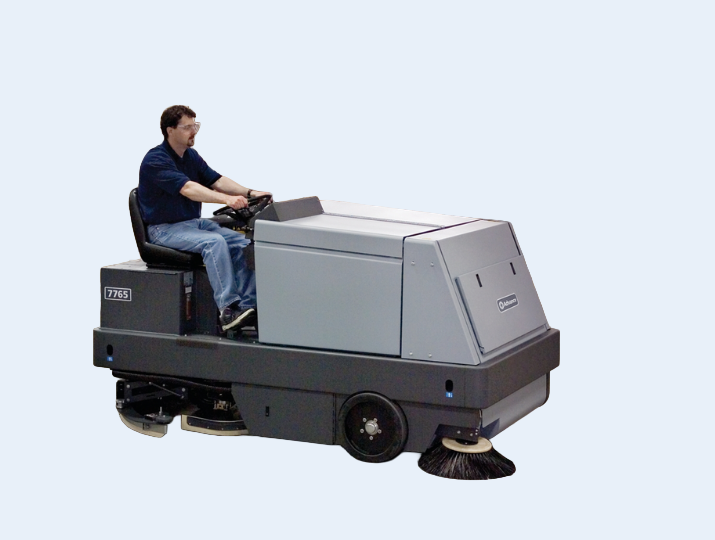
Floor scrubber, sweeper, sweeper-scrubber: the names sound interchangeable, but they do three different jobs, and buying the wrong one means either dirty floors or a machine that clogs. This guide explains the difference between a floor scrubber, a sweeper, and a sweeper-scrubber in plain terms, then gives you a simple decision table so you can pick the right one the first time.
Quick answer: A floor scrubber cleans floors with water and detergent but does not pick up loose debris. A sweeper collects dry debris but does not wet-clean. A sweeper-scrubber does both in one pass, sweeping up debris and scrubbing the floor at the same time. Choose based on whether your floors are dusty, wet-dirty, or both.
What a Floor Scrubber Does
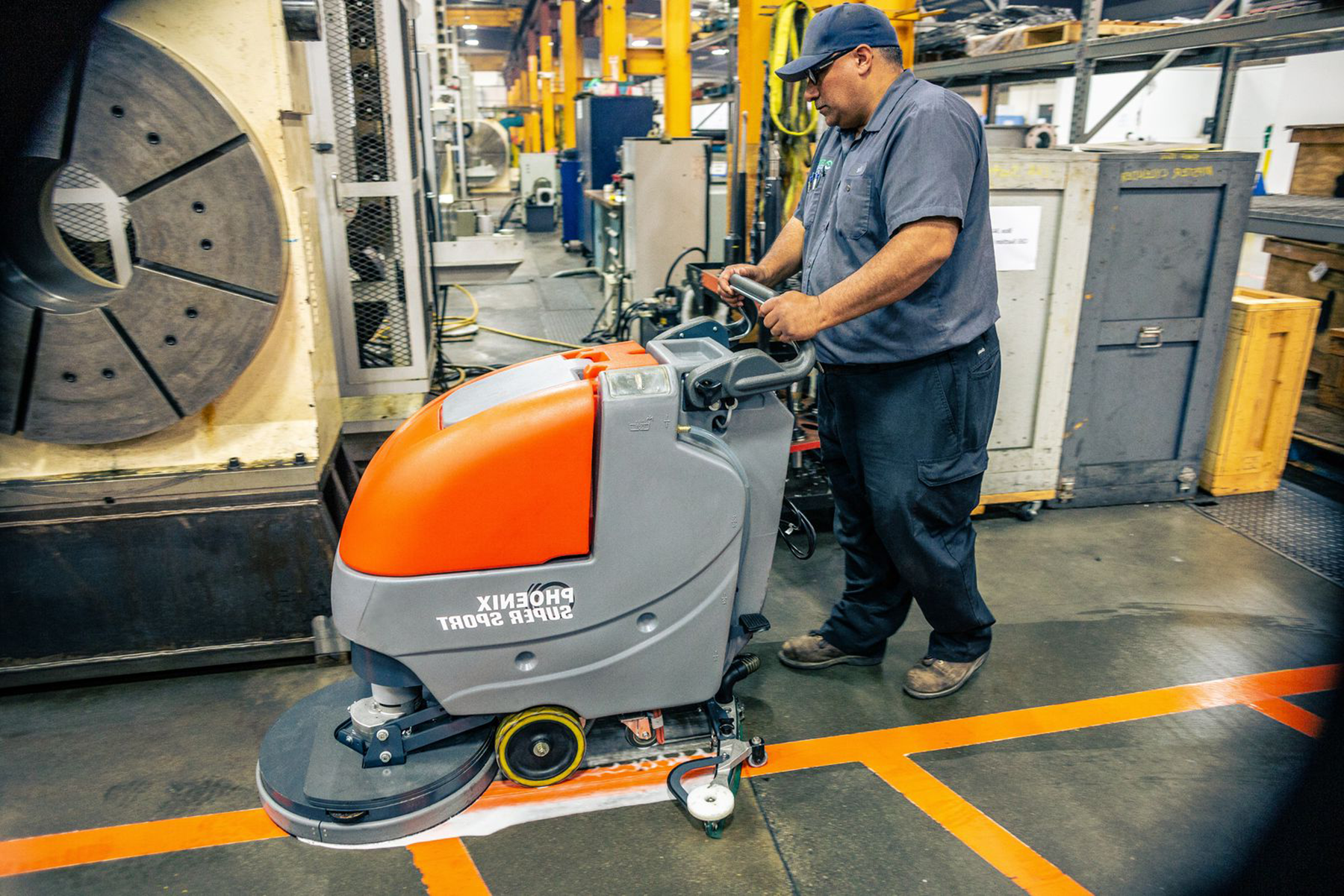
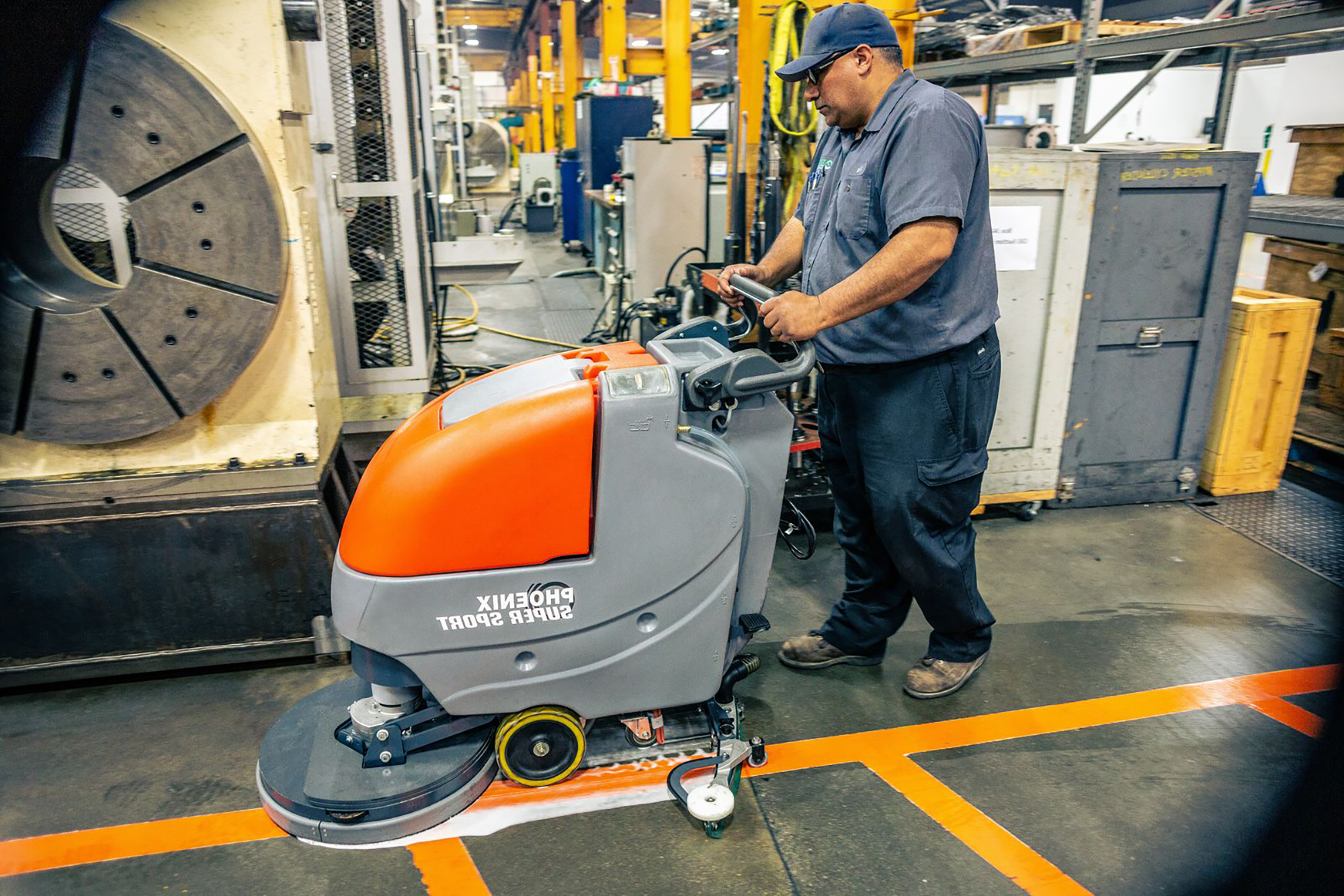
A floor scrubber applies water and detergent, scrubs the floor with brushes or pads, and vacuums up the dirty solution, leaving the floor clean and nearly dry. It is built for removing grime, grease, spills and stuck-on soil from hard floors. What it does not do well is pick up loose debris like gravel, packaging scraps or heavy dust, which can interfere with the brushes. Explore models on our walk-behind floor scrubbers and ride-on floor scrubbers pages.
What a Sweeper Does
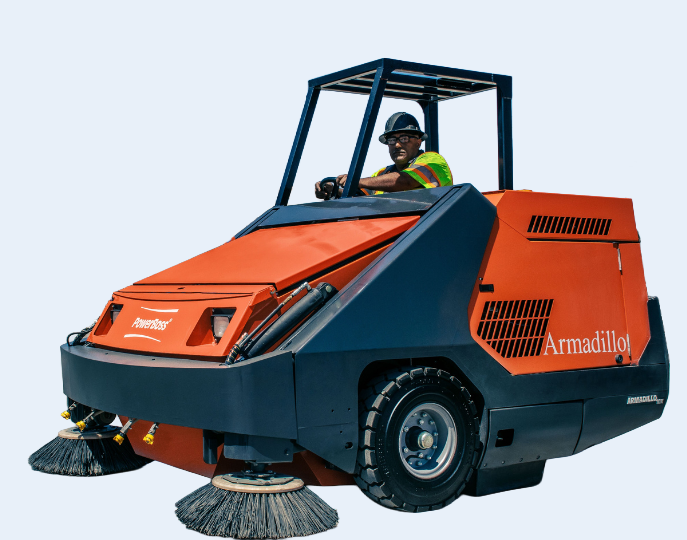
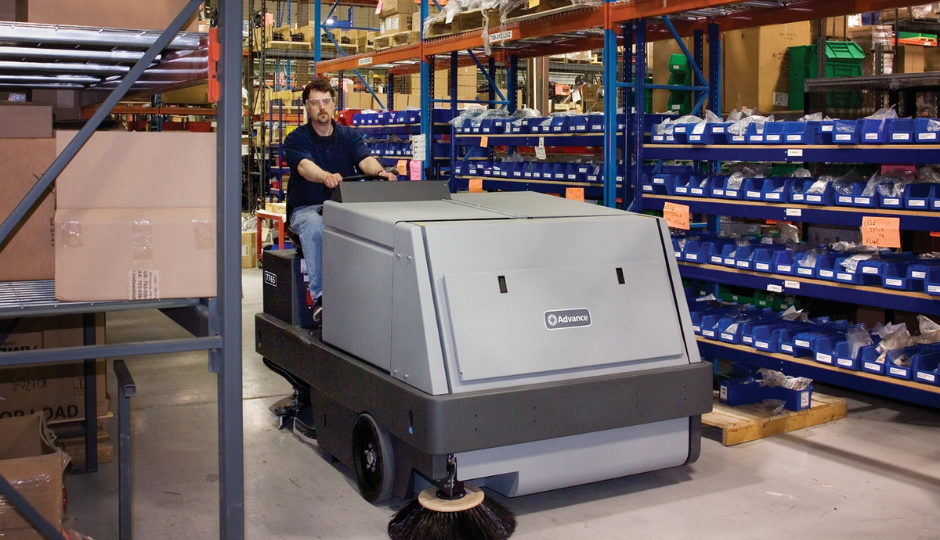
A floor sweeper collects dry debris, dust and litter using brooms and a hopper, the way a broom does but far faster and over much larger areas. It is the right tool for dusty warehouses, parking areas and any floor where the main problem is loose material rather than sticky grime. A sweeper does not wet-clean, so it will not remove grease or stains. See options on our industrial floor sweepers page.
What a Sweeper-Scrubber Does
A sweeper-scrubber combines both jobs in a single machine and a single pass. It sweeps up dry debris first, then scrubs the floor wet right behind it, so you clean loose material and stuck-on soil at the same time. This is the efficient choice for floors that collect both debris and grime, because it saves a separate sweeping step before you scrub. See combination machines on our sweeper-scrubbers page.
Decision Table: Which One Do You Need?
| Your floor problem | Best machine | Why |
|---|---|---|
| Grease, spills, stuck-on grime | Floor scrubber | Wet-cleans and removes soil, leaves floors nearly dry |
| Dust, dirt, loose debris, litter | Sweeper | Collects dry material fast over large areas |
| Both debris and grime | Sweeper-scrubber | Sweeps and scrubs in one pass, saves a step |
| Mostly clean floors, light maintenance | Floor scrubber | Keeps sealed floors clean and safe day to day |
| Large outdoor lots and hardscape | Sweeper | Handles gravel, leaves and litter over big areas |
Can You Use One Machine for Everything?
Not really, and that is the point of the sweeper-scrubber. If you run a plain scrubber over debris-covered floors, the debris jams the brushes and ends up in the recovery tank. If you only sweep floors that also have grease or spills, the grime stays behind. When your floors have both problems, a sweeper-scrubber is the one machine that handles them together. When your floors have only one problem, the dedicated machine is simpler and often less expensive.
A Simple Way to Decide
- If your floors are wet-dirty (grease, spills, grime), choose a floor scrubber.
- If your floors are dry-dirty (dust, debris, litter), choose a sweeper.
- If your floors are both, choose a sweeper-scrubber and clean in one pass.
- If you are unsure, tell us your floor type and what collects on it, and we will match the machine.
Frequently Asked Questions
What is the difference between a floor scrubber and a sweeper?
A floor scrubber wet-cleans with water, detergent and brushes and vacuums up the solution, removing grime and spills. A sweeper collects dry debris, dust and litter into a hopper but does not wet-clean. Use a scrubber for grease and stuck-on soil, and a sweeper for loose material.
What is a sweeper-scrubber?
A sweeper-scrubber is a combination machine that sweeps up dry debris and scrubs the floor wet in the same pass. It is built for floors that collect both loose debris and grime, so you clean everything in one step instead of sweeping first and scrubbing second.
Do I need a sweeper if I already have a scrubber?
You might, if your floors collect a lot of loose debris. Running a scrubber over gravel, dust or packaging scraps can clog the brushes and fill the recovery tank. Either sweep first, or use a sweeper-scrubber that handles debris and grime together.
Which machine is best for a warehouse?
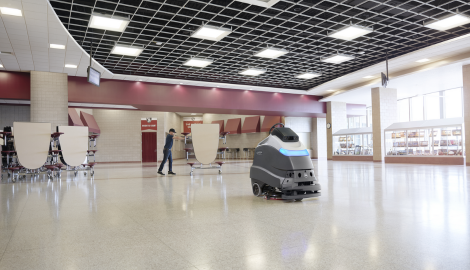
It depends on what your warehouse floors collect. Dusty, debris-heavy floors favor a sweeper. Grimy or spill-prone floors favor a scrubber. Floors with both are the classic case for a sweeper-scrubber. Facility size then determines whether you go walk-behind, ride-on or autonomous.
Can I rent these machines to test them?
Yes. Haaker Total Clean rents scrubbers, sweepers and sweeper-scrubbers across California, Nevada and Arizona, plus free demos, so you can run the right type on your own floors before you buy.
The Bottom Line
Match the machine to the mess. Grime calls for a scrubber, loose debris calls for a sweeper, and floors with both call for a sweeper-scrubber. Once you know the type, facility size and floor type point you to the right model. If you are not sure, our team can size it with you in a few minutes.
Why Choose Haaker Total Clean
For more than 40 years, Haaker Total Clean has supplied floor scrubbers, sweepers and sweeper-scrubbers across California, Nevada and Arizona, backed by sales, rentals, parts, factory-trained service and free demos. We help you choose the right machine for your floors and budget, then keep it running.
Talk to the branch nearest you: Los Angeles / La Verne at 909-598-2706, San Diego / Santee at 619-569-1946, Inland Empire / Colton at 909-370-2100, Central Valley / Fresno at 559-220-8897, Northern California / Hayward at 510-514-0043, Las Vegas, NV at 702-639-0156, and Phoenix, AZ at 602-266-8214. You can also reach us through our contact page to schedule a free demo or request a quote.