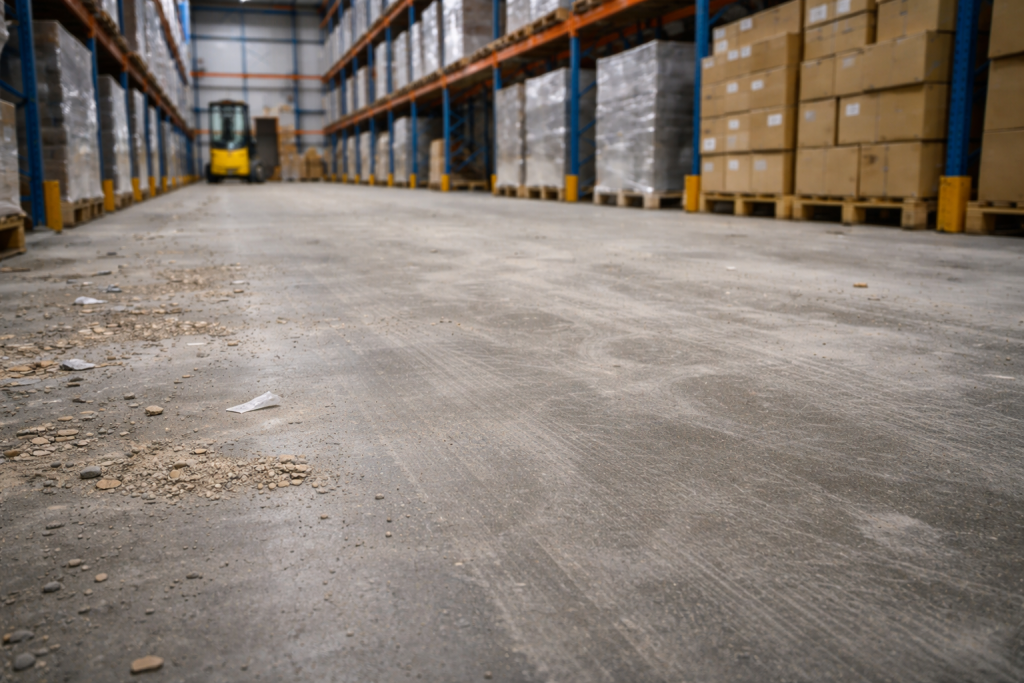
Dust looks harmless until it isn’t. It turns smooth floors slick, makes your scrubber work twice as hard, and leaves that dull gray haze that never seems to go away.
Most “floor cleaning problems” aren’t really scrubber problems. They’re dust control problems. If you start washing before you’ve removed dry soil, you’re basically making dirty soup and spreading it across the building.
This guide breaks down a practical pre-sweep strategy, plus clear rules for when to use a industrial sweeper, a scrubber, or a combo machine. You’ll get quick examples, simple decision points, and a checklist you can use on your next shift.
Why dust control and pre-sweeping matter before you scrub
Dust control means keeping dry soil (grit, powder, sand, chips) from becoming airborne or getting ground into the floor. A pre-sweep strategy is the plan for removing that dry soil before wet cleaning starts, using the right machine and a repeatable route.
When you scrub a dusty floor without pre-sweeping, a few predictable things happen:
- Loose grit turns into muddy paste, then dries as streaks.
- Squeegee blades can’t seal well, so water lines appear.
- Recovery tanks fill with heavy sludge, and dump-outs take longer.
- Filters and vac paths clog faster, which cuts pickup and leaves puddles.
- Pads and brushes wear out early because they’re grinding sand.
The payoff from a good pre-sweep is easy to see. Floors dry faster, look better, and stay safer underfoot. You also cut down airborne dust, which helps indoor air and reduces cleanup on shelves, product, and equipment. Over time, you protect the floor finish (or concrete surface) and spend fewer labor hours re-doing work.
Why Partner with Haaker Total Clean
The challenge: good strategy fails without the right equipment and support
Even the best dust control and pre-sweep strategy can fall apart if the machines are undersized, poorly specified, or unsupported after the sale. Facilities often struggle with sweepers that kick up dust instead of capturing it, scrubbers that streak no matter how they’re adjusted, or combo machines that promise efficiency but can’t handle real-world soil loads. The result is wasted labor, frustrated operators, and floors that never quite look right.
The Haaker Total Clean solution: equipment, expertise, and long-term support
Haaker Total Clean helps facilities turn strategy into consistent results. Rather than pushing a one-size-fits-all machine, the team focuses on matching the right sweeper, scrubber, or combo machine to your building layout, soil type, traffic patterns, and staffing realities.
Signs you need to pre-sweep (and not just start scrubbing)
These clues show up in almost every facility. If you spot one or two, pre-sweep before you scrub.
- Visible grit in corners, joints, and along edges
- Sand at entrances or in vestibules
- Pallet debris (wood bits, stretch wrap, strapping)
- Powdery residue near production areas or around bags
- Dust clouds when you walk or when a forklift passes
- Scrubber leaves a gray film after drying
- Frequent squeegee streaks, even with new blades
- Filters load up fast, or you see dust on the machine body
- Floor drains clog more often after cleaning
Where the dust comes from in real facilities
Dust sources vary by site, but they tend to repeat by building type.
Warehouses and distribution centers collect pallet wood, broken cardboard, shrink wrap scraps, and tracked-in soil from dock doors. Manufacturing areas can add powders, plastic fines, and metal dust from cutting or grinding. Parking decks and entrances bring in sand, salt, and grit, especially in winter.
Schools and retail buildings get a constant mix of entryway grit, sidewalk dust, and paper bits. Construction or remodel work adds drywall dust that floats everywhere and settles in layers, even behind doors.
Weather also plays a part. Winter de-icer gets crushed into sharp grit. Spring pollen and dry wind can coat entry zones in a fine film that turns ugly once it gets wet.
Industrial Sweeper vs Floor Scrubber vs Combo Machine: How to choose the right Floor Cleaning Equipment
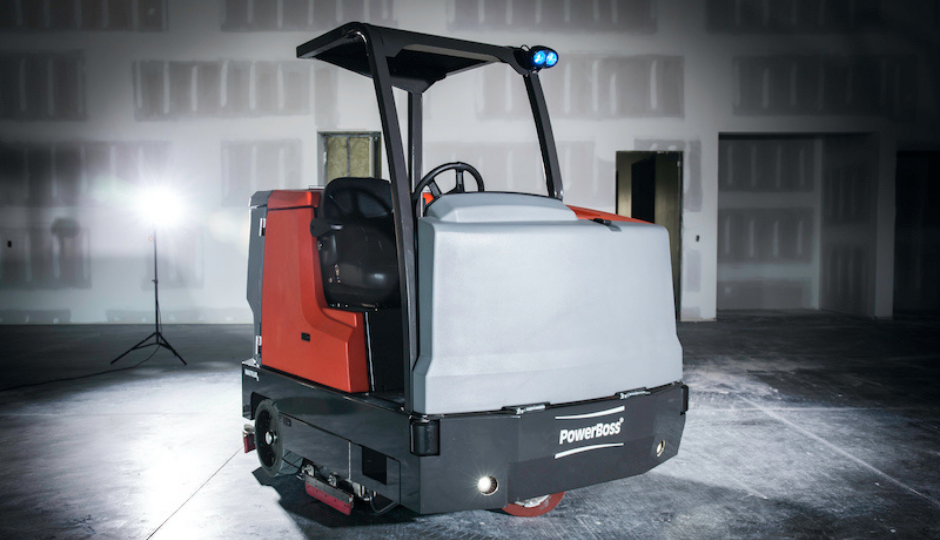
A simple way to choose is to think in three buckets:
1) What’s on the floor?
Dry debris and dust, stuck-on film, oily residue, sticky spills, or a mix.
2) How much area and how fast?
A small hallway is different from a 200,000 square foot warehouse.
3) What result do you need right now?
Do you need dry, safe floors for traffic right away, or is it after hours?
In plain terms:
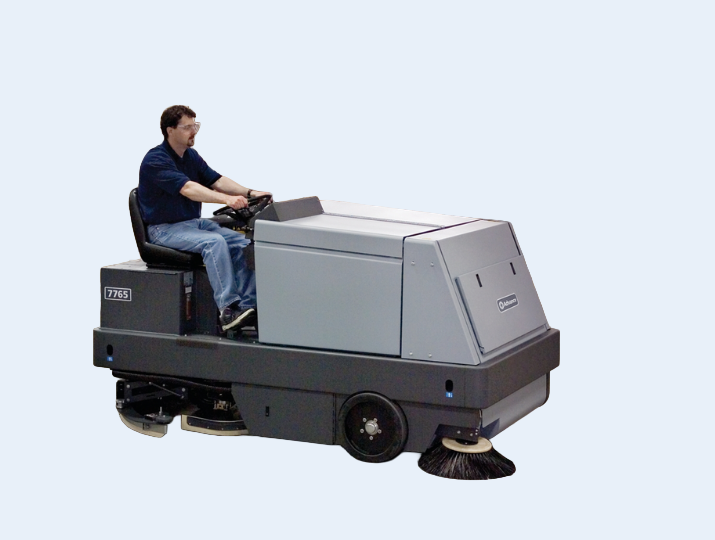
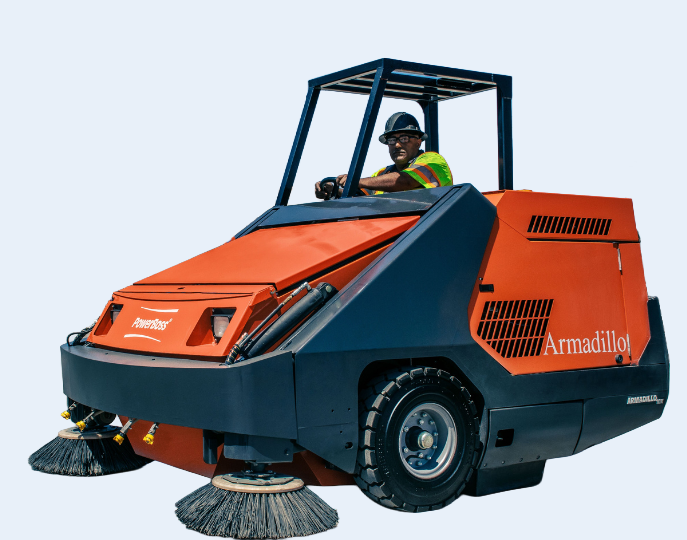
- Sweepers pick up dry soil (litter, grit, dust) using brooms and filtration.
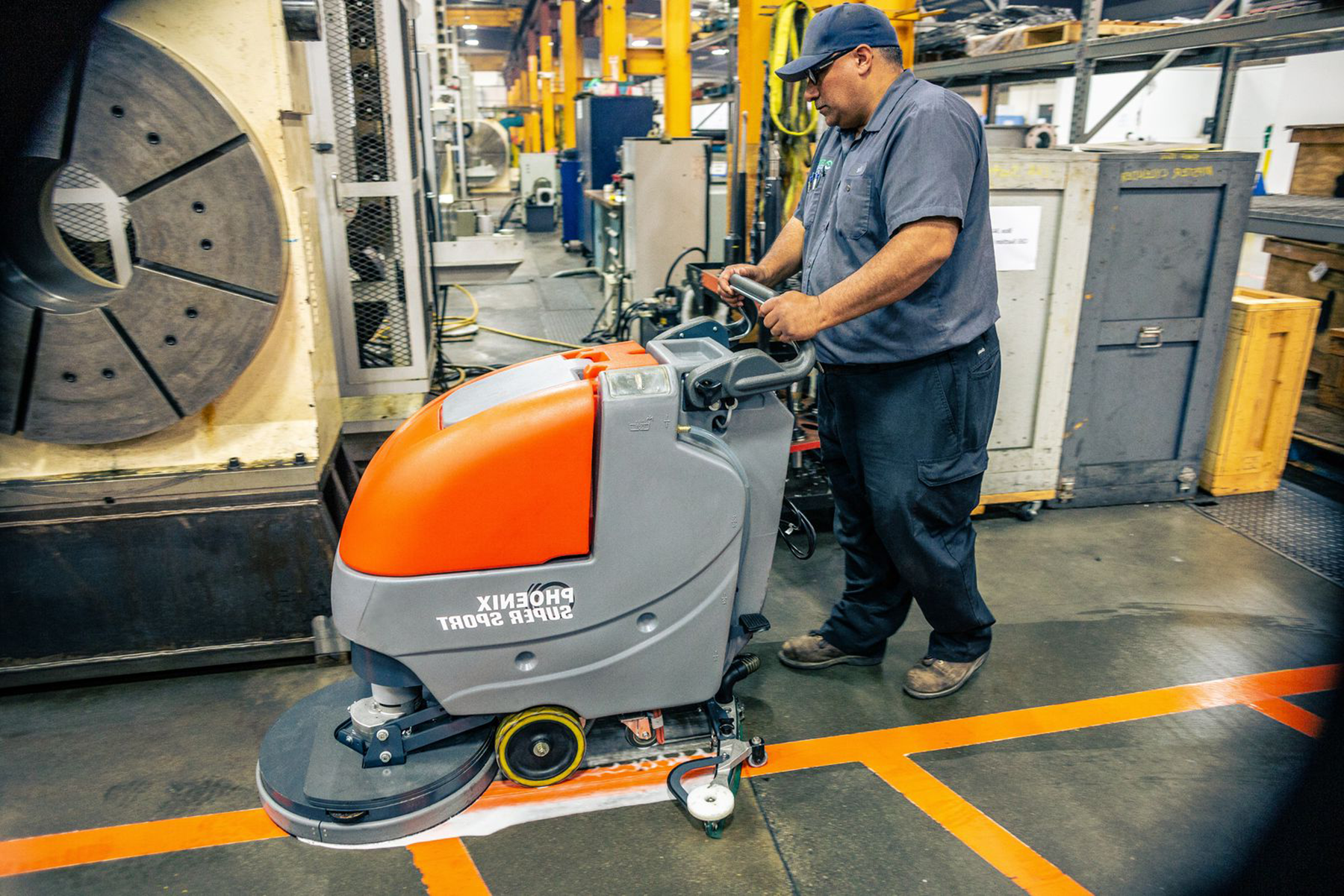
- Scrubbers wash and recover water, leaving the floor cleaner and dry.
- Combo machines sweep and scrub in one pass, with some tradeoffs.
Getting the order right matters. Loose soil first, then wet cleaning when needed.
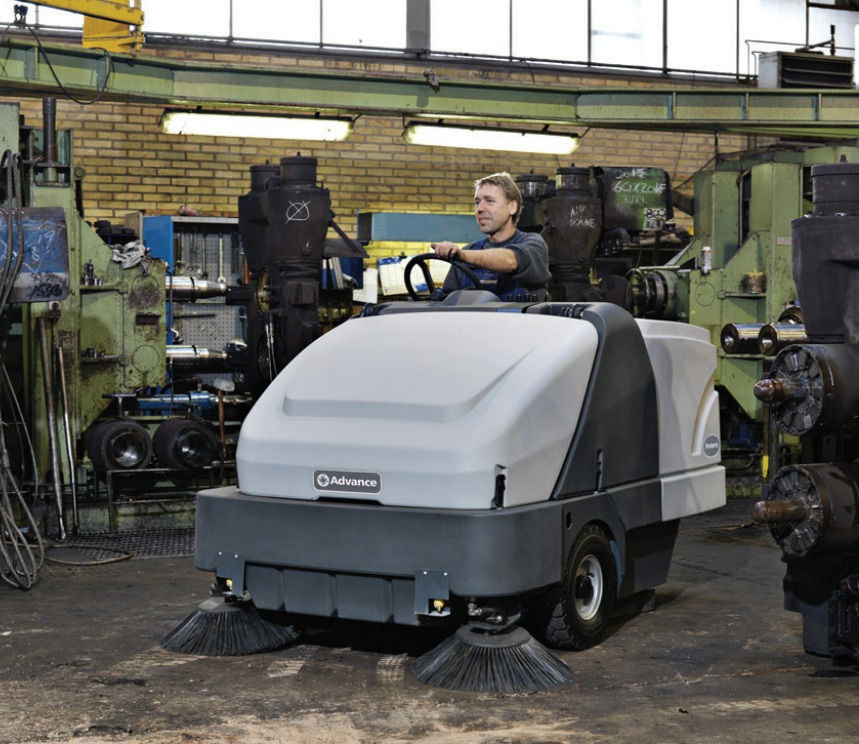
When to use a sweeper (best for dry debris and heavy dust)
Use a sweeper when the floor has dry material you can see, or fine dust that keeps coming back. Sweepers shine in docks, warehouse aisles, outdoor pads, dusty production areas, and anywhere forklifts track soil all day.
A good sweeper does two jobs at once: it lifts soil with the main broom, then keeps dust from escaping with its filter system. That filtration piece is the difference between “picked up” and “blew around.”
Key points to look for or set up correctly:
Dust control filtration: Better filters trap finer dust and reduce haze behind the machine.
Side brooms: They pull debris out from rack legs, curbs, and wall lines.
Hopper size and dump method: If the hopper fills every 10 minutes, productivity drops.
Turning radius: Tight aisles and work cells need control more than speed.
What sweepers don’t do well: remove sticky spills, oily film, or ground-in marks. If the floor still looks dull after sweeping, that’s a scrub job, not “more sweeping.”
When to use a scrubber (best for stuck-on soil and clean, dry floors)
Scrubbers are for washing. They break up film, scuffs, and residue, then vacuum the dirty water so the floor dries quickly. They’re the right tool for hallways, finished concrete, sealed floors, cafeterias, healthcare spaces, and schools.
Scrubbers work best when loose grit is already gone. If not, the pad or brush becomes sandpaper, and the squeegee fights a losing battle.
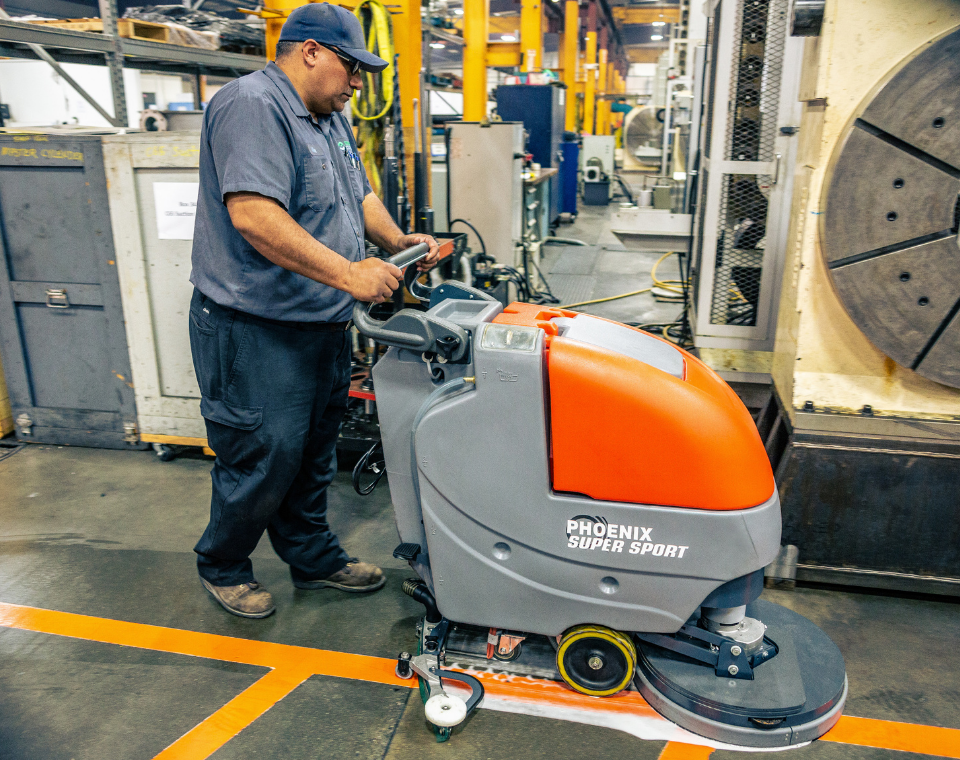
A few practical scrubber basics:
Pad vs brush: Pads can give a uniform finish on smooth floors, brushes can handle light texture and grout lines better.
Water pickup: Squeegee blades and the vacuum path are as important as the brush deck. A worn blade leaves trails.
Chemical match: Neutral cleaner for daily soil, stronger cleaners only when film and grease demand it.
If you’re seeing swirl marks, streaks, or “dirty water smell” in the tank, your scrubber is likely cleaning on top of loose soil, or the machine needs basic daily care.
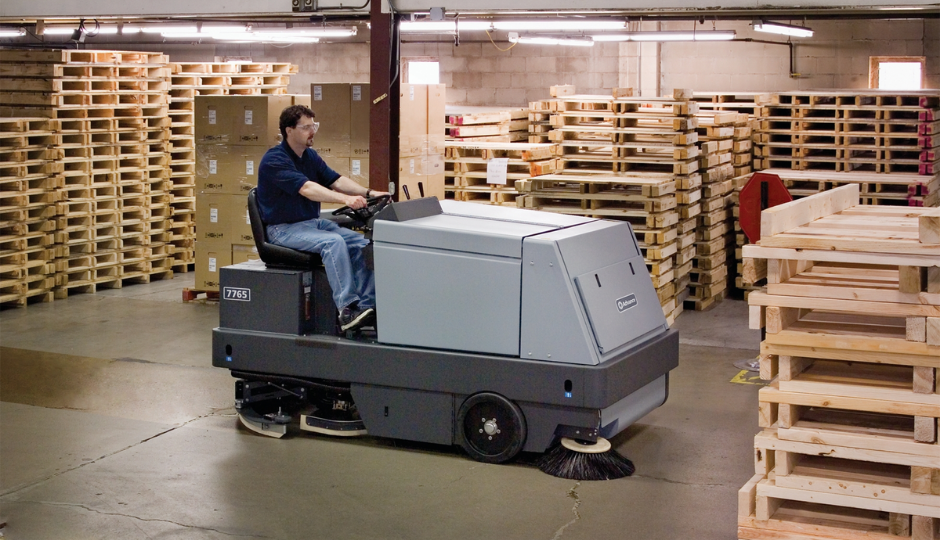
When a combo machine makes sense, and when it does not
A combo machine (sweep and scrub) can be a smart middle ground. One pass can replace a separate sweep, then scrub cycle, which saves labor and shortens the time the area is blocked off.
Combo machines fit best when you have mixed soil, light debris plus a thin film, spread across large open areas. Big-box retail, distribution centers, and wide production floors often fall into this category.
But a combo machine isn’t magic. It has limits:
- It may not replace a dedicated sweeper for heavy debris like pallet chunks or lots of wrap.
- It can struggle with very fine dust if filtration is weak or seals are worn.
- It needs good operator habits, or debris gets pushed ahead and ends up in the scrub path.
Simple scenarios:
Combo is ideal: Large retail aisles with entry grit and light scuffs, wide warehouse lanes with steady dust, production areas with light powder and foot traffic marks.
Combo is not ideal: Metal chips (sharp and heavy), extreme dust loads that overwhelm filters, outdoor grit tracked in during storms, areas with frequent sticky spills that need targeted scrub chemistry.
Build a simple pre-sweep strategy that cuts dust and saves time
A pre-sweep strategy should be repeatable. It doesn’t need to be fancy, it needs to fit the way your building actually moves.
Start with three ideas:
Hit the soil where it enters.
Clear edges and corners so it doesn’t migrate back.
Keep machines tuned so they capture dust, not just move it.
A practical workflow: entrances to edges to main lanes
A simple route prevents you from chasing dust in circles.
Start at entryways, vestibules, and transition mats. These zones act like a “sand feeder” for the whole building. If you skip them, the rest of your work doesn’t hold.
Next, run edges and corners. Use side brooms along walls, rack legs, dock plates, and door tracks. Slow down in dusty zones so the broom can lift and the filter can capture.
Finish with main lanes and open areas. Save loading zones and dock doors for last, since they often shed debris while you work.
Two small habits make a big difference: empty the hopper before it overfills, and check for wrap or straps caught in the broom area before they cause streaks.
Match frequency to traffic and soil: a simple schedule
Forget perfect calendars. Set a starting point, then adjust based on what you see.
- Entryways and vestibules: daily (more during bad weather)
- Main aisles and travel lanes: several times per week
- Low-traffic storage zones: weekly
- After special events: deliveries, storms, or any construction work
If the floor looks dusty two days after you swept, that’s your schedule talking. Increase frequency in the dirtiest zones first, not everywhere.

Dust control settings and habits that make machines work better
Most dust problems come from small misses that stack up.
For sweepers and combo machines:
Clean or shake filters on schedule: A loaded filter reduces airflow and lets dust escape.
Check seals and skirts: Air gaps turn suction into a dust leak.
Use the right broom type: Too stiff can kick up dust, too soft can miss grit.
Don’t drive too fast: Speed throws debris and reduces pickup.
For walk behind or riding floor scrubbers:
Use enough water to carry soil, but not so much that the squeegee floods.
Set pad pressure to the job: Too much pressure can leave marks and wear pads fast.
Wipe and inspect squeegee blades daily: A nicked blade leaves a steady trail.
Use the right cleaner for the soil: Grease needs a degreaser, daily soil usually doesn’t.
A two-minute check at the start of a shift often saves 20 minutes of rework later.
Quick decision guide and common mistakes to avoid
When time is tight, you need rules your team can remember.
If this is on the floor, use this machine
| What you see on the floor | Best first choice | Notes |
|---|---|---|
| Grit, sand, salt, pallet scraps | Sweeper | Pre-sweep before any wet cleaning |
| Sticky spills, drink syrup, greasy spots | Scrubber | Spot scrub first, then full pass if needed |
| Light debris plus dull film in large areas | Combo machine | One-pass cleaning, watch edges |
| Heavy debris, then visible film underneath | Sweeper, then scrubber | Two-step saves pads and squeegees |
| Fine powder (flour, cement dust, pollen) | Sweeper with strong filtration | Slow speed, clean filters often |
Mistakes that make floors look worse (and how to fix them fast)
Scrubbing over loose grit: This causes streaks and scratches. Fix: one pre-sweep pass, then scrub.
Using too much water: It floods the squeegee and spreads soil. Fix: reduce flow, slow down, clean blades.
Skipping filter care: Dust escapes and settles right back down. Fix: clean filters and check seals.
Overfilling the hopper: Pickup drops and debris spills out on turns. Fix: dump sooner, especially in dock zones.
Worn squeegees: The floor stays wet and looks streaky. Fix: flip or replace blades, then re-run the lane.
Wrong pad or brush: Too aggressive can haze a finish, too mild leaves film. Fix: match the pad to the soil, not the schedule.
Rushing turns: It leaves curved water lines and debris trails. Fix: slow down at the end of each pass, then turn.
If you only fix one thing this week, fix the habit of skipping the pre-sweep. It’s the root cause in most “our scrubber doesn’t work” complaints.
What sets Haaker Total Clean apart:
Application-driven recommendations
You get guidance based on how your facility actually operates—dock activity, entryway conditions, dust load, and cleaning frequency—so your pre-sweep and scrub process works in the field, not just on paper.
Proper dust control and filtration expertise
Haaker Total Clean understands that filtration, skirts, seals, and broom selection are just as important as machine size. This ensures sweepers and combo machines capture fine dust instead of redistributing it across the building.
Access to commercial-grade sweepers, scrubbers, and combo machines
From compact units for tight aisles to ride-on machines for large warehouses, Haaker Total Clean supplies equipment designed for industrial and commercial environments—not light-duty compromises that struggle under real soil conditions.
Training that improves results immediately
Operator habits matter. Haaker Total Clean helps teams understand machine setup, pre-sweep routes, filter care, water control, and squeegee maintenance so floors look better on the first pass and stay cleaner longer.
Service, parts, and support after the sale
Downtime kills productivity. With local service support, floor scrubber parts availability, and preventive maintenance guidance, Haaker Total Clean keeps your machines running and your cleaning schedule on track.
Clean floors start with dust control, not extra scrub passes. Build a pre-sweep strategy that targets entry zones and edges first, then pick the machine that matches what’s on the floor: sweeper for dry soil, scrubber for film and spills, combo when you need both in one pass. Contact Haaker Total Clean today to learn more: https://totalcleanequip.com/contact/