Choosing a floor scrubber starts with one honest question: how much floor do you clean, how often, and who is going to run the machine? Get those answers right and the rest of the decision, from scrub path to battery run time to whether you buy or rent, falls into place quickly. This guide walks facility managers and operations teams through how to choose a floor scrubber without overspending or under-buying, and points you to the exact machine types that fit real facilities across California, Nevada and Arizona.
Quick answer: To choose a floor scrubber, match the machine to your square footage and cleaning frequency. Walk-behind units suit spaces under about 20,000 square feet, ride-on scrubbers clean large open floors fast, sweeper-scrubbers handle debris and wet scrubbing in one pass, and autonomous scrubbers cut labor on big, repetitive floors.
Start With the Four Main Types of Floor Scrubbers
Almost every buying decision comes down to picking the right category first. Here is what each type does best.
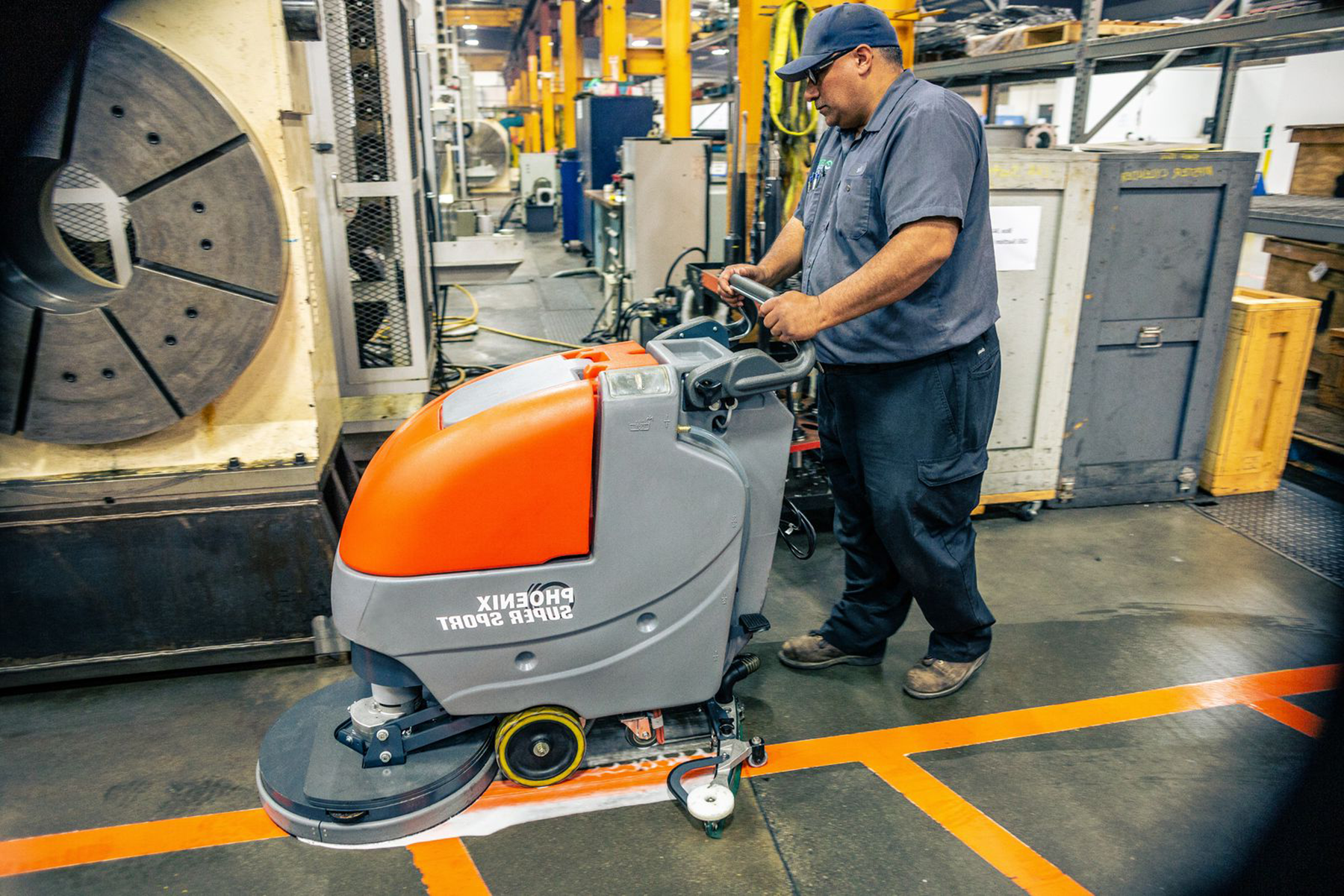
Walk-Behind Floor Scrubbers
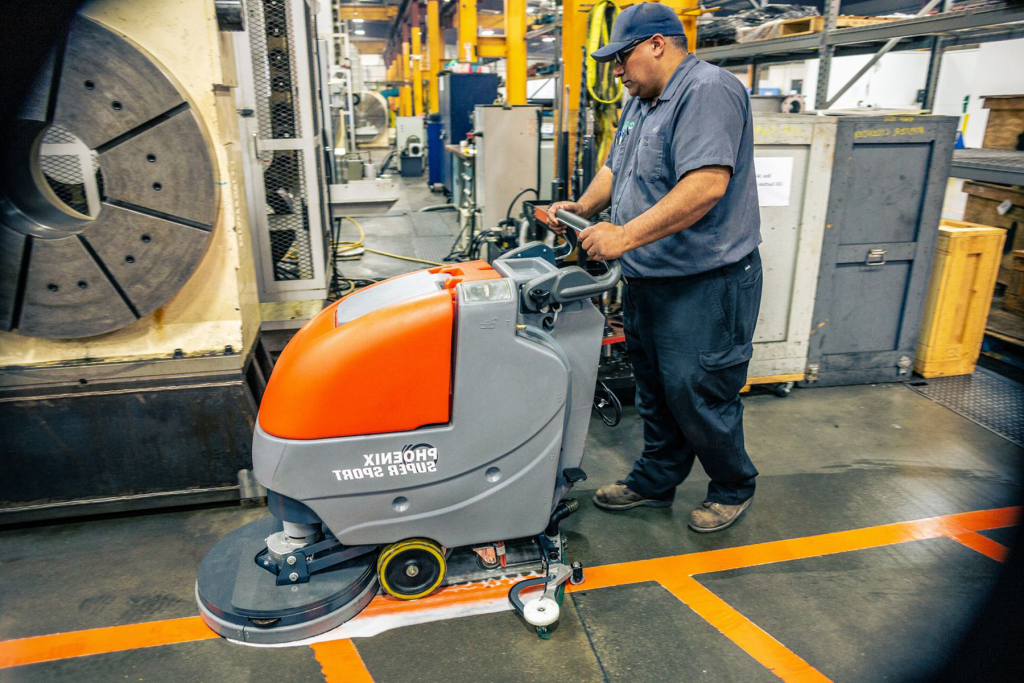
Walk-behind scrubbers are the workhorses for small to mid-size facilities and tighter layouts with aisles, corners and obstacles. An operator walks the machine, so they are easy to train on and simple to maneuver. They fit most warehouses, retail floors, schools and medical facilities up to roughly 20,000 square feet. See the full lineup on our walk-behind floor scrubbers page.
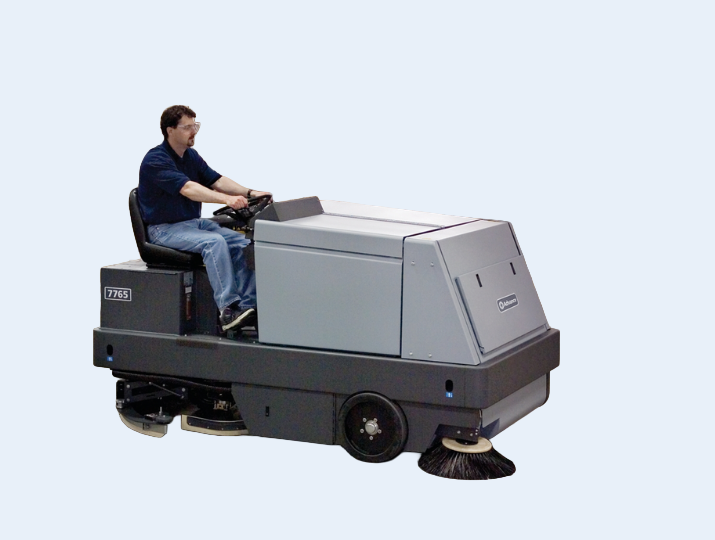
Ride-On Floor Scrubbers
Ride-on scrubbers cover a lot of ground fast. When your floors run into the tens of thousands of square feet, a rider cleans far more per hour than a walk-behind and reduces operator fatigue. They shine in large warehouses, distribution centers and manufacturing plants. Compare models on our ride-on floor scrubbers page.
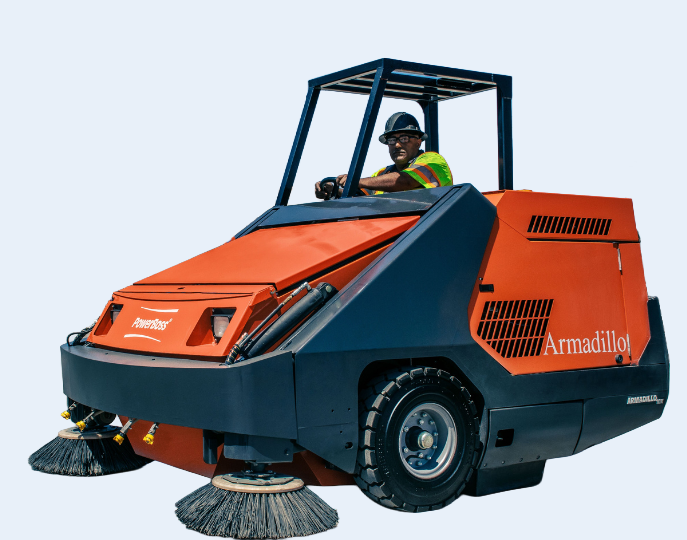
Sweeper-Scrubbers
A sweeper-scrubber sweeps up dry debris and scrubs the floor wet in a single pass. If your floors collect grit, packaging scraps or dust that would clog a plain scrubber, this one-pass approach saves a whole cleaning step. Explore combination machines on our sweeper-scrubbers page.
Autonomous Floor Scrubbers
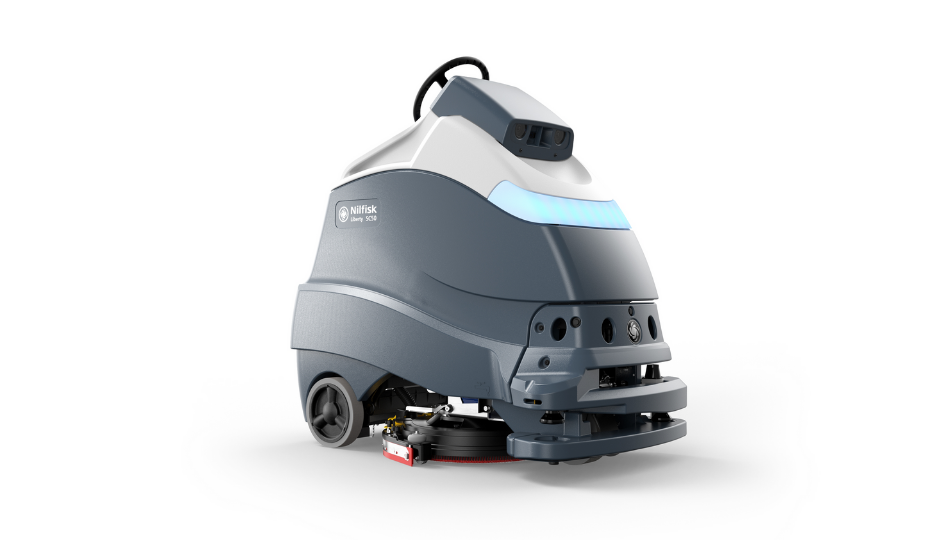
Autonomous, or robotic, scrubbers clean on their own after a one-time mapping session. They are built for large, repetitive floors where labor is short or hard to schedule, such as distribution centers, hospitals and big-box retail. Your team deploys and retrieves the unit, and the machine handles the scrubbing. Learn more on our autonomous floor scrubbers page.
Compare Floor Scrubber Types at a Glance
Use this table to narrow the field before you look at specific models.
| Type | Best facility size | Operator | Cleans debris? | Ideal for |
|---|---|---|---|---|
| Walk-behind | Up to ~20,000 sq ft | Walks the machine | No (scrub only) | Retail, schools, clinics, tight aisles |
| Ride-on | 20,000+ sq ft | Rides the machine | No (scrub only) | Large warehouses, plants, distribution |
| Sweeper-scrubber | Mid to large | Walk or ride | Yes (sweeps + scrubs) | Floors with grit, debris, packaging waste |
| Autonomous | Large, open, repetitive | Runs on its own | No (scrub only) | Big-box, healthcare, short-staffed sites |
The Five Factors That Decide Which Floor Scrubber You Need
1. Facility Size and Layout
Square footage sets the baseline, and layout fine-tunes it. Wide-open floors favor bigger machines and wider scrub paths. Tight aisles, racking and doorways favor a compact walk-behind that turns easily. Measure your largest continuous cleaning area, not just total square footage.
2. Floor Type and Soil
Sealed concrete, tile, epoxy and polished floors each respond differently to brush pressure, pad type and water flow. Heavy grease or food soil calls for more aggressive scrubbing and the right detergent, while delicate finishes need a gentler setup. Clean, dry floors also reduce slip-and-fall risk, which the U.S. Occupational Safety and Health Administration ties directly to walking-working surface safety (OSHA walking-working surfaces).
3. Run Time: Battery, Cord, or Fuel
Battery scrubbers are the most common and give you cord-free range for a set number of hours per charge. Match battery run time to how long your cleaning shift actually is, with a margin. For very large sites or long shifts, look at higher-capacity batteries or ride-on models that run longer between charges.
4. Buy, Rent, or Buy Used
Not every operation should buy new. Renting makes sense for short-term projects, seasonal spikes or trialing a machine before you commit, and you can start on our floor scrubber rental page. Certified used equipment delivers industrial cleaning power at a lower cost, inspected and ready to work.
5. Labor and Operator Availability
If you are short on staff or struggle to schedule cleaning, that changes the math. A ride-on covers more floor per labor hour, and an autonomous scrubber removes the operator from the cleaning cycle entirely. When labor is your constraint, spending more on the machine often pays back fast.
A Simple Way to Decide
- If your floors are under 20,000 square feet with tight aisles, choose a walk-behind scrubber.
- If you clean large, open floors and want speed, choose a ride-on scrubber.
- If your floors collect grit or debris, choose a sweeper-scrubber so you sweep and scrub in one pass.
- If your floors are big and repetitive and labor is tight, choose an autonomous scrubber.
- If the need is short-term or you want to test first, rent before you buy.
- If budget is the main constraint, look at certified used machines.
Brands and What They Are Known For
The right brand depends on your machine type and how hard you run it. Haaker Total Clean carries PowerBoss and Nilfisk-Advance for heavy-duty industrial and commercial scrubbing, Clarke and Viper for reliable mid-size performance, Nitehawk for sweeping, and Hydro Tek for pressure washing. For autonomy, the Nilfisk Liberty line brings robotic scrubbing to large facilities. Naming your floor type, square footage and shift length lets our team match you to the right make and model rather than the biggest one.
Frequently Asked Questions
How do I know what size floor scrubber I need?
Start with your largest continuous cleaning area and your shift length. Under about 20,000 square feet, a walk-behind usually fits. Above that, a ride-on cleans faster with less operator fatigue. Wide-open floors take bigger scrub paths, while tight aisles need a compact, maneuverable machine.
What is the difference between a floor scrubber and a sweeper-scrubber?
A floor scrubber cleans with water, detergent and brushes but does not pick up loose debris well. A sweeper-scrubber sweeps up dry debris and scrubs the floor wet in the same pass. If your floors collect grit or packaging waste, the sweeper-scrubber saves a separate sweeping step.
Should I buy or rent a floor scrubber?
Buy when you clean the same floors on an ongoing schedule and want the lowest long-term cost. Rent for short-term projects, seasonal spikes or to trial a machine before committing. Renting also avoids maintenance and storage costs, and it is an easy way to confirm the right size before you purchase.
Are autonomous floor scrubbers worth it?
They are worth it for large, repetitive floors where labor is short or expensive. After a one-time setup, the machine runs on its own, so your staff only deploy and retrieve it. On big facilities, the labor savings often offset the higher equipment cost within a few years.
How long do floor scrubber batteries last?
Run time varies by model and battery type, typically from a couple of hours to a full shift on larger machines. The key is matching run time to your actual cleaning window with a margin. Our team can size the battery to your shift so you are not recharging mid-clean.
Does Haaker Total Clean service the machines it sells?
Yes. Haaker Total Clean provides parts and factory-trained service across California, Nevada and Arizona, plus planned maintenance to keep your equipment running. We also offer free demos so you can see a machine on your own floors before you decide.
The Bottom Line
Choosing a floor scrubber is about fit, not features. Match the type to your square footage and layout, factor in floor type, run time, budget and labor, and you will land on the right machine the first time. When you are ready to compare specific models, or want to see one run on your floors, our team can help you size it correctly.
Why Choose Haaker Total Clean for Your Floor Scrubber
For more than 40 years, Haaker Total Clean has supplied commercial and industrial floor scrubbers, sweepers and pressure washers across California, Nevada and Arizona, backed by sales, rentals, parts, factory-trained service and free equipment demos. As an authorized dealer for PowerBoss, Nilfisk-Advance and more, we help you choose the right machine for the job and the budget, then keep it running.
Talk to the branch nearest you: Los Angeles / La Verne at 909-598-2706, San Diego / Santee at 619-569-1946, Inland Empire / Colton at 909-370-2100, Central Valley / Fresno at 559-220-8897, Northern California / Hayward at 510-514-0043, Las Vegas, NV at 702-639-0156, and Phoenix, AZ at 602-266-8214. You can also reach us through our contact page to schedule a free demo or request a quote.