Picking an industrial utility vehicle sounds simple until you list the real jobs it has to do. One day it hauls supplies down a narrow warehouse aisle. The next it tows a cart across a campus, or shuttles guests to a resort lobby. The wrong match means a vehicle that is too big, too weak or too awkward for the work, and crews who stop using it.
This guide helps you choose by starting with the job, not the model name. We walk through the questions that matter: what you carry, what you tow, who rides along, where the vehicle runs and how long the workday is. Because models and configurations vary, call your nearest Haaker Total Clean branch for exact specs, pricing and availability.
To choose an industrial utility vehicle, start with the main job: hauling cargo, towing carts or moving people. Then look at where it will run, how heavy the loads are, how tight the spaces are and how you will power it. A Total Clean specialist can confirm which model fits.
Start With the Job: Hauling, Towing or Moving People
Most buying mistakes happen because the team shopped by model before agreeing on the job. Write down the main tasks the vehicle will do every day. Everything else is a bonus.
Hauling Cargo
Hauling means loads ride on the vehicle itself. Think boxes, tools, parts, supplies, landscape materials or pallet loads. Here the bed or platform matters most, along with how easy it is to load and unload items.
Ask yourself how often the load changes. A crew that carries the same kind of cargo every day can pick a body built around it. A crew that carries something different every day usually wants a flexible layout.
Towing Carts and Trailers
Towing means the vehicle pulls something behind it, such as a cart train in a plant, a baggage cart at an airport or a trailer on a large property. Towing is about pulling strength, hitch setup and stopping control, not just bed size. If towing is the main task, tell the dealer exactly what you will tow and how heavy it is when fully loaded.
Moving People
Passenger work is a different job. You need seats, safe entry and exit, a comfortable ride and a look that fits your property. Hotels, resorts, hospitals, campuses and airports often fall here. Our post on how to manage guest transport with the Pickman Passenger shows how one property approached it.

Payload and Towing: Two Separate Questions
Payload is the weight a vehicle carries. Tow capacity is the weight it pulls. These are separate ratings, and ratings differ by model and configuration, so never assume one number covers both.
Add Up the Real Load
Do not guess from memory. Weigh your typical load, then add the heaviest load you expect now and then. A vehicle that handles only the average day will be overworked on the heavy days.
Also count anything that rides along, like tool boxes, racks, a driver and a passenger. Those add up faster than most teams expect. Leave some margin so the vehicle is not running at its limit all day.
Think About Towing Separately
A cart train on flat concrete is a very different test than a loaded trailer on a hill. Describe your real route, your real load and your real hitch needs. A Total Clean specialist can then tell you which models and configurations make sense for that work.
Think About Weight Distribution
A load that is tall, narrow or shifting can feel unstable. Ask about tie downs, side rails, tailgates and racks. Good load control matters as much as the headline rating.
Bed and Platform Styles
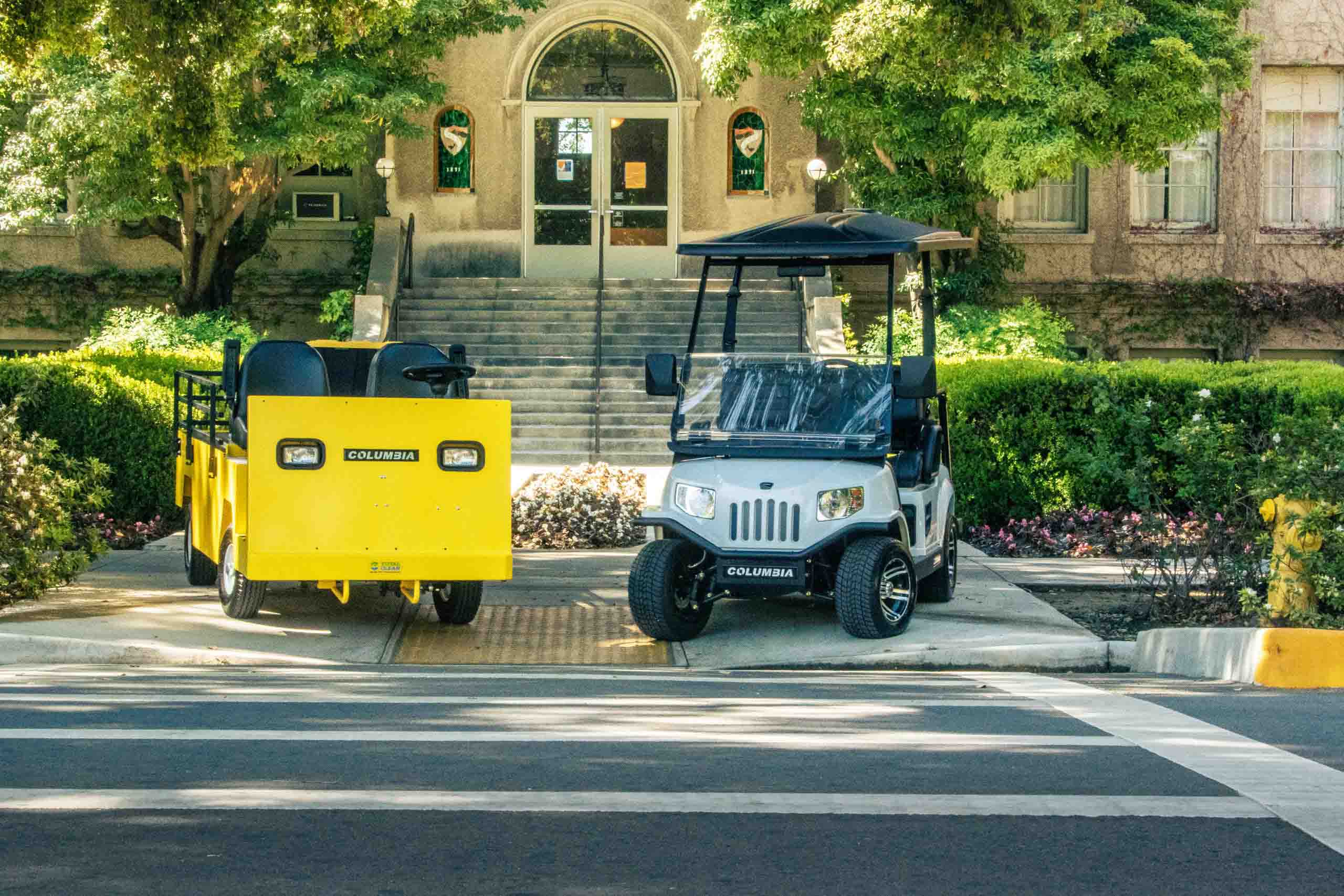
Total Clean carries Columbia utility vehicles in several body styles, and the right one depends on what you carry. For exact dimensions, ratings and what is currently available, call your nearest Haaker Total Clean branch or check each model page.
Open Beds and General Hauling
For mixed cargo, tools and supplies, many buyers want a flexible layout that is easy to load from the side or rear. The Columbia Journeyman is one page to review if your work is varied.
Cabs, Racks and Weather Protection
Outdoor crews should think about sun, wind and rain, and about whether they need to carry long items like ladders or pipe. Ask about cab and rack options. The Columbia Utilitruck page is a good place to start looking.

Platforms and Material Handling
If you move boxes, totes or pallet loads, think about platform height, load securing and how you will load and unload. Review the Columbia Stockchaser, Expediter and Payloader pages, then ask a specialist which one suits your cargo.
People and Custom Needs
If people are part of the job, look at the Columbia Chariot page and talk with a specialist about your seating needs. If none of the standard options fits, ask about the Columbia custom platform and what can be arranged for your task.
Where It Will Run: Indoor, Outdoor and Tight Spaces
The environment often narrows the choice faster than the load does. A vehicle that suits an open yard can be frustrating inside a building, and the reverse is also true.
Warehouses and Narrow Aisles
Indoors, size and turning ability matter. Measure your narrowest aisle, your tightest corner and your lowest doorway, and bring those measurements to your branch. Also think about noise, floor protection and how the vehicle will be powered indoors. Our article on narrow warehouse spaces and the Columbia Stockchaser goes deeper on this use.
Campuses, Plants and Large Properties
Outdoors, you care more about ride quality, weather protection and getting across the whole site in a shift. Sidewalks, ramps, curbs and slopes all change how a vehicle behaves. Walk your longest route before you decide, and note every hill.
Airports, Resorts and Hospitality
These sites mix cargo and people, often around guests. A clean look, easy entry and a calm ride matter. Many properties use a mix of vehicles, one for guests and another for staff and supplies. See how utility vehicles are used in hospitality operations.

Pickman Utility Vehicles
Total Clean also carries Pickman utility vehicles. The product line includes several named models, and each has its own page. Models and configurations vary, so call your nearest Haaker Total Clean branch for the exact specs and what is available.
Pickman Passenger
The Pickman Passenger page is a good starting point if moving people is part of your job. Tell a specialist how many people you move, how far and over what surfaces.
Mission, Classic and XR Models
You can also review the Pickman Mission, Pickman Classic, Pickman XR 2D and Pickman XR 4D pages. Ask a Total Clean specialist which model fits your job and how the options differ.

Compare Your Needs at a Glance
This table compares job types and the points to think about. It is not a spec sheet. For model details, ask a specialist or visit the model pages.
| Job Type | What to Consider | Where to Look | Next Step |
|---|---|---|---|
| Mixed hauling | Payload need and bed layout | Columbia model pages | Ask a specialist which model fits |
| Outdoor trades work | Weather protection and racks | Columbia model pages | Ask a specialist about options |
| Warehouse material handling | Aisle width, turning, load height | Columbia model pages | Bring your measurements |
| Towing carts or trailers | Towing need, hitch and route | Columbia model pages | Describe what you tow |
| Moving people | Seating, entry and ride comfort | Pickman and Columbia pages | Ask a specialist about seating |
| Unusual task | Special body or work platform | Columbia custom platform page | Call your nearest branch |
Questions to Ask Before You Buy
Bring these answers to your demo or quote request. They save time and prevent surprises.
Payload and Towing Needs
What is the heaviest load you carry or tow, and how often? Does it include people? Ask a Total Clean specialist to confirm that the exact configuration you are considering fits those needs.
Space and Turning
What is your tightest turn, narrowest aisle and smallest doorway? Bring measurements and ask how the vehicles you are considering compare, with extra room for comfortable driving.
Surfaces and Slopes
Will it run on smooth concrete, asphalt, gravel, turf or ramps? Surface and slope affect traction and braking. Tell your dealer about every surface on the route.
Power, Charging and Fueling
Where will the vehicle be powered up or refueled, and when? Think about access, downtime between shifts and whether it works one shift or several. Describe your real workday so a specialist can talk through the options with you.
Road Use and Operator Training
Will the vehicle ever leave private property? Rules vary by location and situation, so check with the proper local authorities and your insurer. Our post on the license to drive utility vehicles from Columbia and Pickman offers more background. Ask your branch about operator training as well.
If You Need X, Choose Y
- If you haul mixed cargo and tools, review the Columbia Journeyman and ask a specialist about bed options.
- If your crew works outside in all weather, ask about cab and rack options, starting with the Columbia Utilitruck page.
- If you move boxes and pallets in a warehouse, compare the Columbia Stockchaser, Expediter and Payloader pages.
- If you need a specialized body, ask about a Columbia custom platform.
- If guests or staff ride along, review the Pickman Passenger and Columbia Chariot pages.
- If you are not sure, contact your nearest branch and talk through the job with a specialist.
Powering Your Vehicle: Think About Your Site
Every site has its own limits. Some have plenty of places to plug in or refuel. Others have long routes, steep ground or tight schedules. These details shape which vehicle will work well for you.
Before you shop, make a short list: how many hours a day the vehicle works, how far it travels, where it parks overnight and who drives it. Our post on Columbia utility vehicles for facility operations shares more ideas. Then call your nearest Haaker Total Clean branch to go over power options and what is available.
Frequently Asked Questions
What is an industrial utility vehicle?
An industrial utility vehicle is a work vehicle built to carry cargo, tow carts or move people around facilities and large properties. Different models serve different jobs. Call your nearest Haaker Total Clean branch to learn which models and configurations fit your site and what is currently available.
How do I know how much payload I need?
Weigh your typical and heaviest loads, then add the weight of the driver, passengers and any racks or boxes. Choose a vehicle with some margin above that total so it is not working at its limit every day. A Total Clean specialist can confirm the right configuration.
Can a utility vehicle tow, or only carry loads?
Capabilities differ by model and setup, so do not assume. Tell your dealer what you plan to tow, how heavy it is when loaded and what the route looks like. A Total Clean specialist can then point you to the models and configurations worth considering.
Do I need training to drive an industrial utility vehicle?
Requirements depend on your location, your employer and where the vehicle will be used. Check with the proper local authorities and your insurer, and ask your nearest Haaker Total Clean branch about operator training and what to cover before the vehicle goes into service.
How do I choose between a cargo vehicle and a passenger vehicle?
Start with what the vehicle does most often. If people ride every day, focus on seating, entry and comfort. If cargo is the main task, focus on the bed or platform. If you need both, tell a specialist and ask which models and configurations fit.
The Bottom Line
Choose the job first, then the body style, then the model. Measure your loads and your spaces, think about how the vehicle will be powered, and ask a specialist to confirm the details before you buy. A short conversation with your branch will tell you more than a brochure.
Why Choose Haaker Total Clean for Industrial Utility Vehicles
Haaker Total Clean offers new, used and rental equipment, backed by factory-trained technicians and on-site service trucks. Our branches serve customers across California, Nevada and Arizona. Contact your nearest branch for exact specs, pricing, availability and services.
Browse our full range of Columbia and Pickman utility vehicles, schedule a demonstration, request a quote or contact our team with questions. Call the branch nearest you below.
Call or Visit the Branch Nearest You
Haaker Total Clean serves California, Arizona, and Nevada. Tap a number to call, or choose “View map” for the address and directions.